Golden Lily is not a William Morris
I went looking for a date and came back with a different name. On who actually designed Golden Lily, and why the wrong name sticks.
I went looking for a date and came back with a different name.
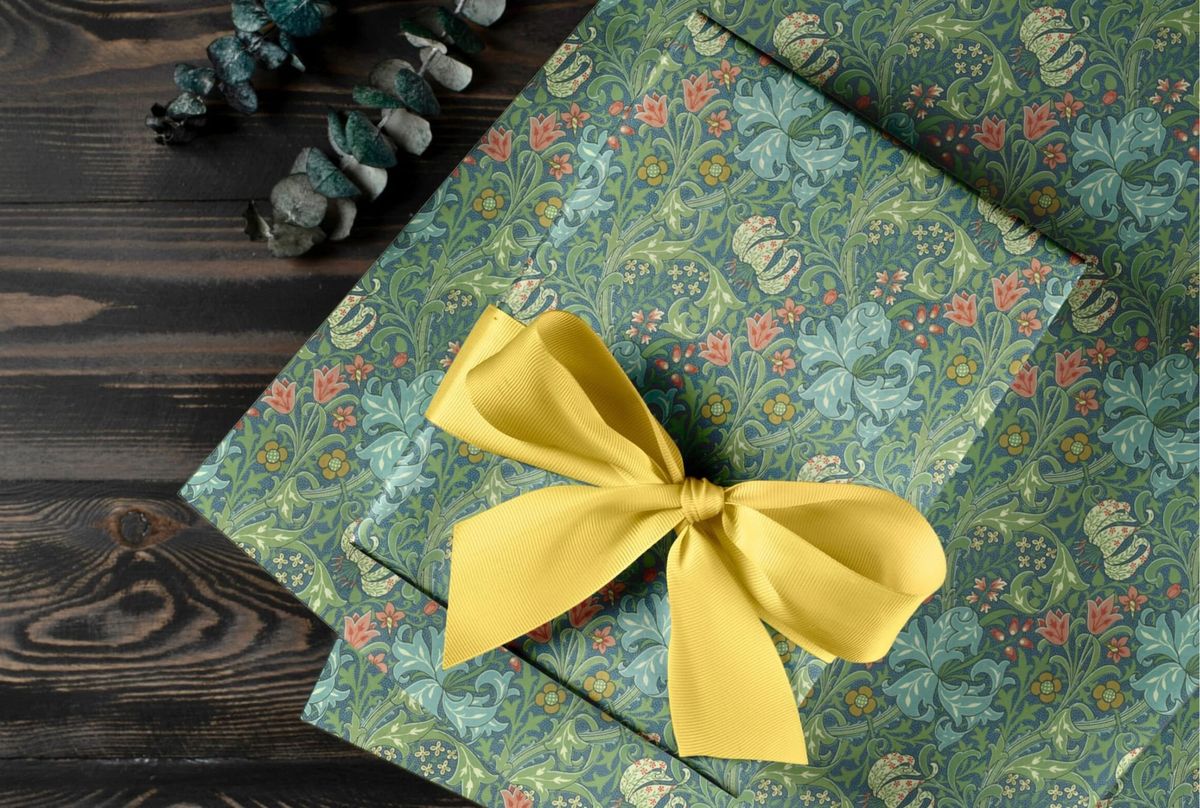
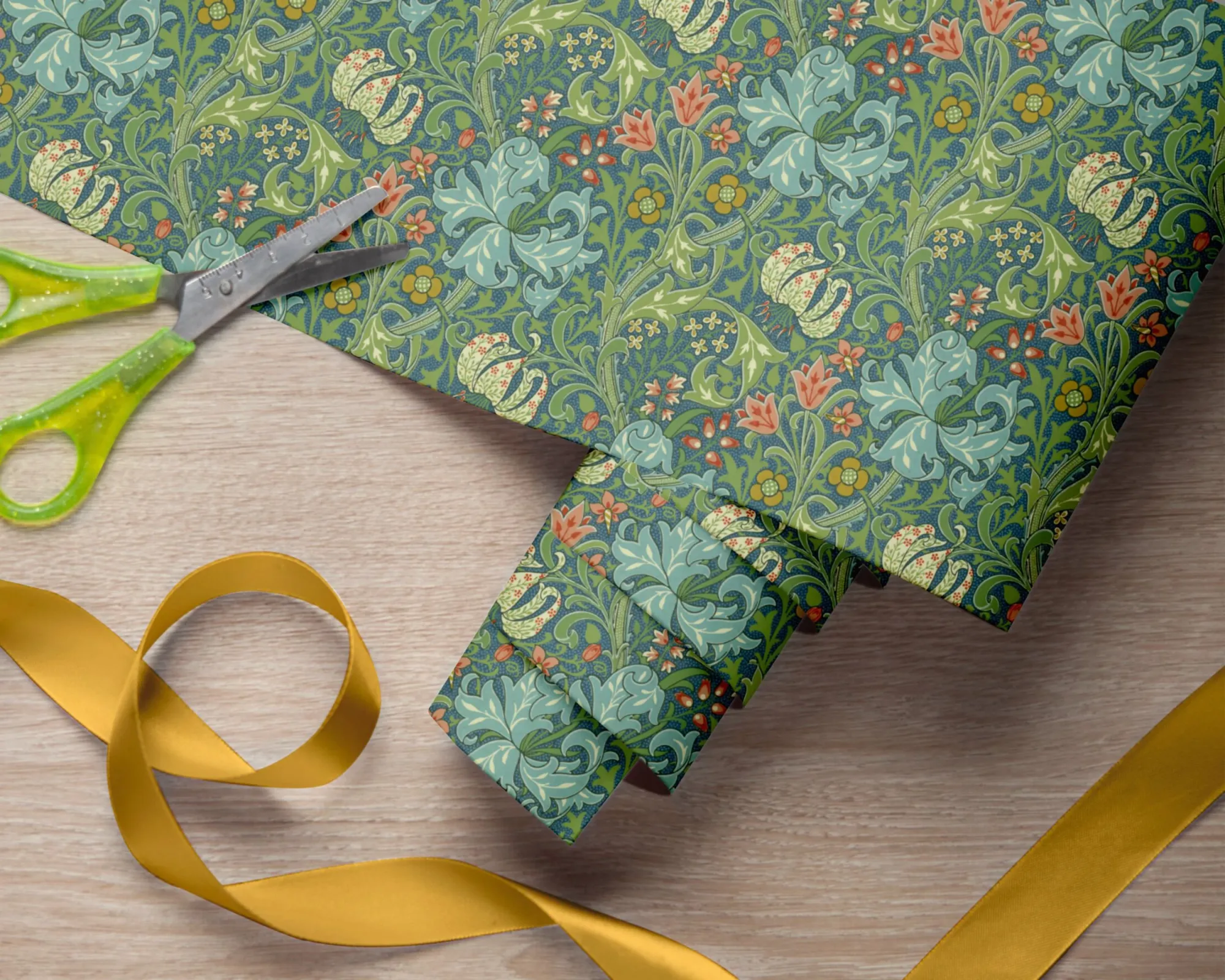
The paper in question is Golden Lily. You will know it even if the name means nothing to you. Entwined stems, flowers in pink and yellow and blue, and behind all of it a dark blue ground scattered with little blue dots. It is on book covers and tote bags and birthday cards. If somebody says William Morris and a pattern appears in your head, there is a fair chance this is the one.
It is not by William Morris.
He was dead. Golden Lily was designed in 1899 and Morris died in 1896, which is a fairly firm alibi. The designer was John Henry Dearle, head designer at Morris & Co by that point, and the good part is that you do not have to take my word for any of it. Morris & Co still exist, still sell the paper, and say so themselves in their own journal. The work is frequently misattributed to William Morris, they write, when it was in fact designed by John Henry Dearle. It is not every day a company goes out of its way to tell you the famous name on the tin is the wrong one.
You can go and look at the thing, more or less. The V&A has a specimen, museum number E.2816-1980, and it is not hanging in a gallery with a light on it. It is one of a hundred and thirty-two papers in a single pattern book, mounted on a stand, under a cloth cover. A sample in a folder, essentially. A very ordinary way for something this well known to spend its time.
A word about the date, because I have become the sort of person who worries about this. A few sources say 1897 rather than 1899. I have gone with 1899 because it is what Morris & Co say, and on the question of when their own head designer drew something I am inclined to let them have it. If anyone knows better I would like to hear.
The wrong name sticks because Morris is the famous one. The firm carried his name long after the work stopped being only his, and a paper made by Morris & Co turns into a paper by Morris somewhere between the shop and the conversation about it. It is what happens to bands, where everyone assumes the singer wrote the songs. A hundred years of labels do not come off in a hurry.
None of which makes the slightest difference to the paper. The lilies are the same lilies. Nobody has ever turned a present over looking for an attribution, and if they did I would worry about them.
I like knowing, though. Half the pleasure of giving something with a pattern on it is being able to say where the pattern came from, and it is a better story when the story is true. Dearle spent his career under somebody else's name, which seems a little hard on him now.
I sell this one as wrapping paper, from a Morris & Co pattern of 1899. Getting the name right costs nothing.